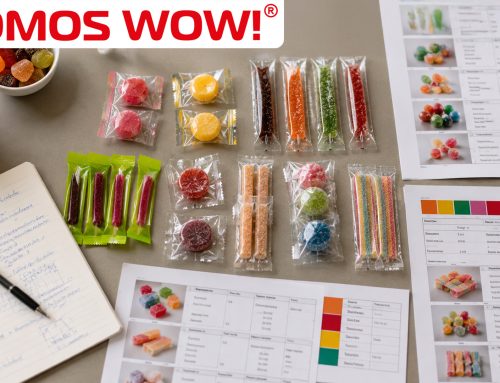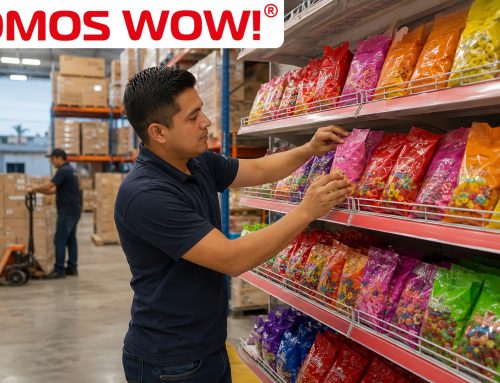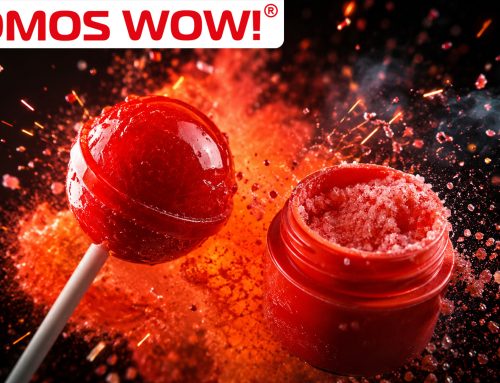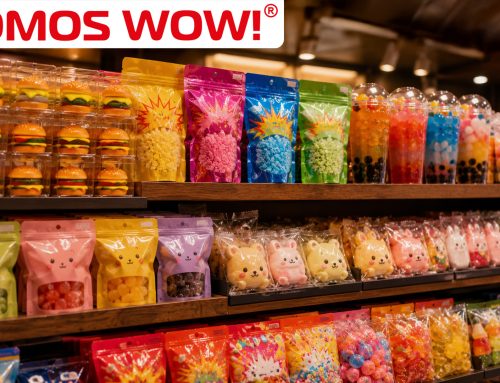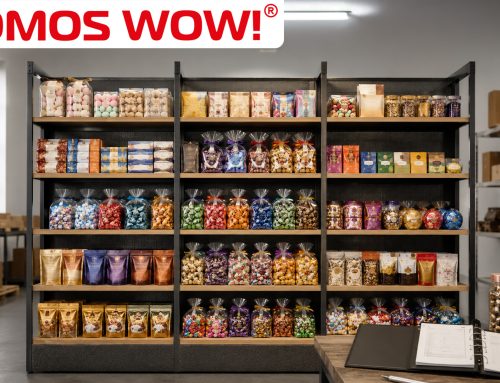
There is a candy category that burns, scrapes the tongue and makes people wince. It is also one of the fastest to be reordered in Ecuador’s traditional retail channel.
For a manufacturer evaluating Latin America, that contradiction is worth understanding. WORLD OF WONDERS W-O-W INTERNATIONAL SAS distributes Mexican candy Ecuador’s shopkeepers reorder week after week, and treats spicy confectionery as a full category with its own flavour grammar, formats and rotation logic — not as an exotic add-on.
A Flavour Language the Market Did Not Have
The regional palate was built on two axes: sweet and sour. Mexico contributes a third that had no formal category here — the chili axis — and with it an entire vocabulary:
- Chili and tajín, the dry coating that stings and salts at once
- Chamoy, the salted sweet-and-sour note that anchors the range
- Chili-and-salt centres, where the heat sits inside the candy rather than on it
- Enchilado-acidulado, the sweet-sour-spicy combination the category is built on
None of this is learned by reading a wrapper. It is learned by tasting — which is why format matters as much as flavour.
What the Category Actually Contains
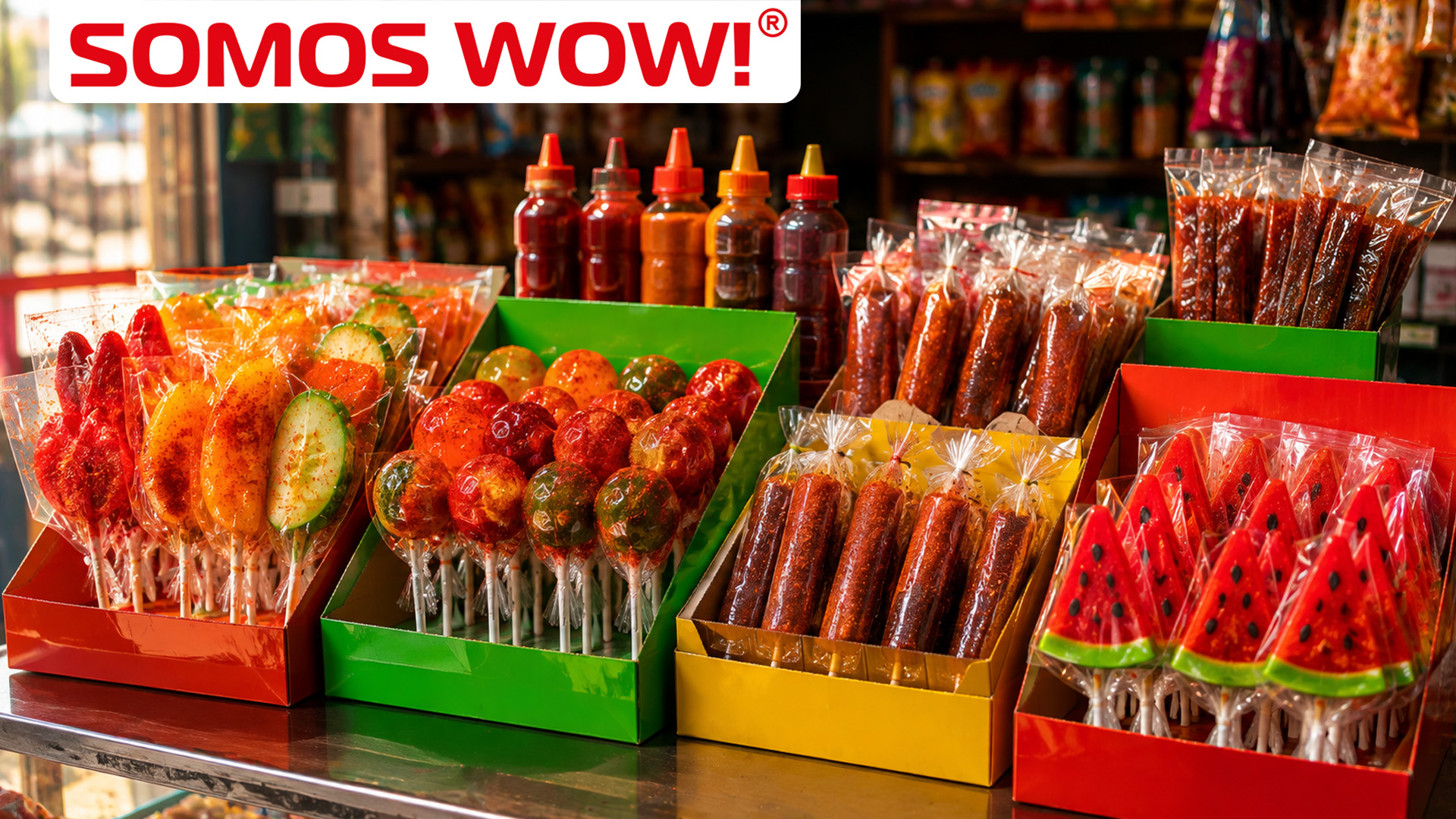
A serious Mexican range is not “some spicy lollipops”. It is a full intensity curve, and ours covers it:
| Format | Presentation |
|---|---|
| Enchilado-acidulado lollipops | Mango, watermelon, filled pineapple and tamarind, in econopack and ziplock |
| Chili-and-tajín lollipops | Low-gram single units, built for by-the-piece sale |
| Chili-and-salt filled candies | Strips and bags: strawberry, mango, watermelon, chamoy and mixed |
| Shaped lollipops | Corn carts, molcajetes and other visually Mexican forms |
| Sensation novelties | Lip and tongue colouring, plus sour-powder-and-lollipop combinations |
Almost all of it is engineered for low unit price and high count per display. That is deliberate: it is what the traditional channel requires.
Why It Rotates
A neighbourhood shop does not buy a product because it is interesting. It buys it because it sells again.
Spicy candy has three things going for it. It builds repetition in a way flat sweetness does not — buyers return asking for the exact format they tried. It carries a low ticket and a fast decision, competing with counter impulse rather than planned spend. And it merchandises itself: lollipop displays take little vertical space and are visible from the door.
What This Signals to a Manufacturer
Bringing Mexican candy into a market is easy. Sustaining replenishment is not — the category runs on many references, uneven rotation between flavours, and high sensitivity to the one flavour a customer asks for being out of stock.
We run this line through stable origin partnerships rather than opportunistic buying, because continuous assortment in a deep category has to be solved upstream of the order. It is the same logic behind a network of more than twenty strategic partners across several countries, and more than fourteen proprietary brands registered with Ecuador’s trademark office.
For a brand assessing Ecuador, that is the relevant question: not whether the market will take the product, but whether the partner can keep it on the shelf.