Short answer: how to choose a candy supplier comes down to five checks, run in this order — that the product arrives in a format the channel can sell, that replenishment of the identical code is provable, that regulatory documentation is complete before negotiating, that the factory process is certified, and that the product survives the route to the last point of sale. A supplier can be excellent and still fail any one of them.
At WORLD OF WONDERS W-O-W INTERNATIONAL SAS that order is not theoretical. It is the sequence we run before anything enters the catalogue.
1. Format Before Product
The first question is not whether the candy is good. It is whether the pack fits where it will be sold.
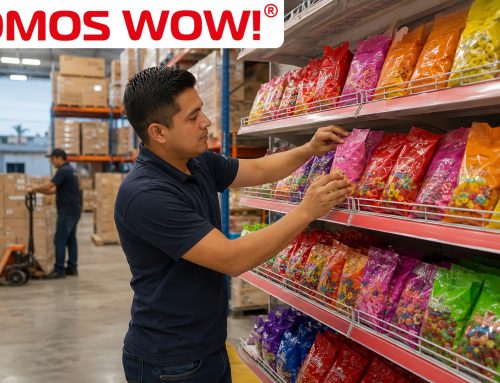
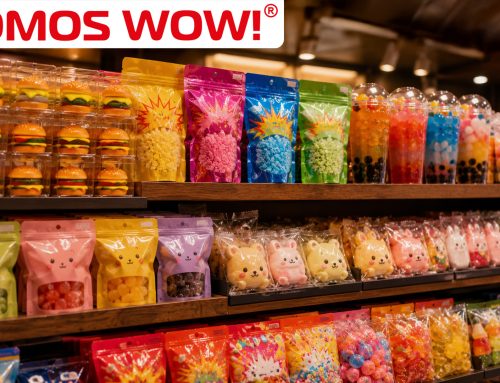
Traditional-channel product needs a low unit price, high count per display, and the ability to be sold one piece at a time. A presentation designed for modern trade — large case, pack pricing, single barcode — dies on a counter where customers buy singles. Many negotiations that collapse late could have ended in the first meeting with this question alone.
2. Replenishment, Not the First Order
Anyone can ship the first container. The fourth is the hard one.
What matters is whether the supplier can deliver the same code, same flavour, same pack within a predictable window. In imported confectionery, lead times range from roughly one month to nearly four depending on origin, and that spread reshapes planning entirely. A flavour that runs out and takes three months to return is not a stockout — it is a customer who has already filled the space with someone else.
3. Documentation Before Terms
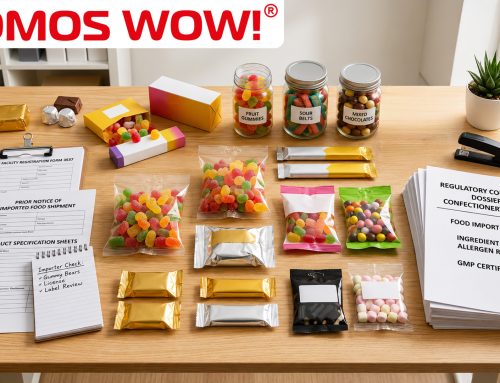
This filter gets skipped often and always charges for it. Before discussing commercial terms, the following should be on the table:
- Full technical sheet and composition, with declared allergens
- Nutritional data complete enough to calculate front-of-pack labelling before committing
- Certificate of origin and traceability to the actual manufacturer
- Everything required to file the destination market’s sanitary registration
A supplier who cannot produce this quickly is not export-ready, however good the product. Discovering it with cargo at the port is the most expensive way to find out.
4. Certified Process
Food safety and management certifications — ISO 22000, HACCP and equivalents — do not guarantee the candy is good. They guarantee the factory can reproduce it identically next time.
It is the same reason we hold our own ISO 9001 certification: across a chain that spans continents, consistency matters more than peak quality.
5. Route Behaviour
The last filter is the least examined and prevents the most returns: how the product arrives at the end of the journey, not how it leaves the factory.
In a hot, humid country with no cold chain into rural areas, some formulations simply do not survive. Chocolate that blooms, gummies that fuse, packaging that opens in the case — these are selection errors, not logistics failures. The honest test is not the sample that reaches the office. It is the one that reaches a provincial shop three weeks later.
Why the Order Matters
The five filters run from cheapest to most expensive to verify. Rejecting on format costs a meeting; discovering a route problem costs a container.
It is the discipline behind a network of more than twenty strategic partners across several countries — and the reason we decline most of what is offered to us. Choosing a supplier well is mostly a matter of rejecting fast.